There’s an attacker-shaped gap between privileged access management (PAM) coverage and PAM maturity. In this gap you’ll find threat actors operating, taking advantage of the fragmentation that exists in enterprise environments. Reasons for this misalignment include a mix of manual processes and native tools, shared credentials for root accounts and partial deployments that leave silos.
Though these may sound like configuration problems, they’re really about maturity of implementation. That’s shown by many reviews in the likes of Gartner Peer Insights and PeerSpot. Recurring themes include deployment overruns due to a mix of fragmented product sets. Operational overheads and pricing increases are also cited.
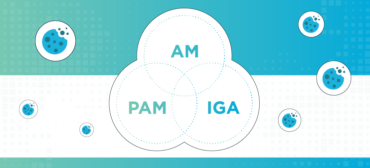
For many enterprises, their adopted PAM platforms aren’t really optimized for progress. Solutions may be all there for PAM, identity and access management (IAM) and identity governance and administration (IGA) but not necessarily connected in all the right places. This leaves ecosystems stuck in early stages of their maturity — some far from the objective of a fully integrated identity fabric. As for how far, that means understanding where they are currently compared to where they want to get to. For example, having a centralized and secure vault is just one piece of the PAM puzzle.
The audit trap: Why having a vault isn’t enough
Vaulting credentials is business-critical but isn’t a business strategy. Storing passwords must also include context about the nature of the storage, specifically which entities and roles can have access, under what privileges or conditions, and for how long.
A just-in-time (JIT) approach brings strategic control of vaulting, as long as it’s not reliant on manual procedures. Instead, teams need to implement automation across all areas of the session lifecycle, like credential rotation, session management and recording, plus attestation to help minimize the attack surface.
This helps push PAM maturity forward, beyond a controlling and reactive focus and toward a real-time monitoring and proactive approach. This evolution can be matched across four main levels.
The PAM maturity model
There are four stages of identity security maturity. Each has recognizable elements that range from siloed tools and visibility gaps to adaptive resilience and scalable, orchestrated governance. Most enterprises are currently between the first two because their PAM ambitions are held back by their existing platforms.
Stage 1: Fragmented approach
Identity sprawl is a growing problem, partly fueled by the proliferation of non-human identities (NHIs). Businesses are already opening access to third parties and offering integrations that increase the number of entry points. Without standardized oversight, policies are enforced inconsistently.
Stage 2: Basic state
Identities are managed centrally, with solutions for PAM, IGA and IAM. However, a lack of integration between solutions is why there are still likely to be silos and low visibility for NHIs, leaving vulnerabilities for threat actors to exploit.
Stage 3: Unified
PAM is managed using one consolidated solution, bridging potential gaps and aligning identity management through a single pane of glass. Automation ensures access can be approved, denied and revoked at scale.
Stage 4: Optimized
PAM can be managed proactively using AI, making it possible to deploy and harden adaptive JIT access. Permissions can be automatically modified and removed, with access requests tracked to users and entities.
PAM maturity: Where most organizations are at and why
PAM users voice their frustrations with PAM tools loud and clear. They often have used other PAM platforms that are optimized for enterprise complexity but not always for enterprise progress. This leads to a maturity gap across various areas, including:
-
Operational overhead
Time spent switching between tools is time that adds to operations and processes. Further friction comes to low-maturity PAM environments that rely on humans for completing processes. There can be delays that lead to bottlenecks, lack of consistency on procedures and risks from human error. -
Fragmentation
Different systems also mean security gaps and risks to the business. Lack of interoperability limits the potential for integrated systems. Shared credentials widen the attack surface and make it impossible to ensure accountability. -
Cost escalation
Separate tools mean multiple licenses and subscriptions pushing up costs. There’s also the impact on productivity and resources needed to manage disparate systems. Plus, more effort is needed to align reports and surface data for auditing and satisfying regulatory requirements. -
NHI blind spots
The speed and scale of NHI activity is beyond any form of manual identity management, outnumbering human counterparts by 82:1. Automation is the answer, but that needs PAM maturity to be in place, in terms of the technology and having it accessible to non-technical users.
Diagnose your PAM maturity: Seven question assessment
Privileged accounts have always been the keys to the kingdom, but the kingdom just got a lot bigger. It’s no longer only human admins holding elevated access. Machine identities, cloud entitlements and now agentic AI workloads all need privilege to do their jobs, and every one of them is a path an attacker can take.
The question isn’t whether you’re “doing PAM.” It’s whether your program is keeping pace with how privilege works today. The seven questions below take a couple of minutes and provide a self-diagnosis score. Answer honestly, because the value is in seeing where the gaps are, not in scoring well. At the end, you’ll find where your program sits across four maturity stages, and what it takes to move up.
1. Privileged account discovery: Can you name every privileged account in your environment right now?
-
No. We rely on spreadsheets or tribal knowledge, and we know there are gaps.
-
Mostly. We inventory periodically, but cloud and service accounts lag.
-
Yes. We have continuous discovery across on-prem and cloud in one place.
-
Yes. Discovery is automated and feeds our broader identity fabric, including NHIs.
2. Credential control: How are your privileged credentials stored and rotated?
-
Shared, static passwords, some embedded in scripts or config files.
-
Vaulted, but rotation is manual or inconsistent across systems.
-
Vaulted, with automated rotation and no hardcoded secrets.
-
Fully vaulted and rotated, with secrets governed the same way across every platform and workload.
3. Standing privilege: When someone needs admin access, how do they get it?
-
They already have it. Standing admin rights are the norm.
-
Access is requested and approved but often stays granted after the task.
-
Access is granted JIT and revoked automatically when done.
-
Zero standing privilege by default. Elevation is JIT, policy-driven and audited end to end.
4. Session oversight: What visibility do you have into what privileged users actually do?
-
Little to none once access is granted.
-
We log sessions, but review is manual and after the fact.
-
Sessions are recorded and monitored, and we can terminate risky activity live.
-
Session activity is analyzed for behavioral risk and correlated with the rest of our identity signals.
5. Emerging identity coverage: Does your PAM program extend beyond human admins?
-
No. It covers human privileged users only.
-
We’re aware of machine and service accounts but manage them separately.
-
Human and non-human identities are governed under one PAM approach.
-
Yes. Humans, machine identities, cloud entitlements and agentic AI workloads are all governed together.
6. Audit and compliance: Can you produce a full audit trail of who accessed what, when and why, on demand?
-
Not easily. Pulling audit evidence is a manual scramble before each audit.
-
We can, but it means stitching together logs from several systems.
-
Yes. Privileged access is logged centrally and reportable on demand.
-
Yes. Access is continuously attested, and audit-ready reporting maps to our compliance frameworks.
7. Operational excellence: How much manual effort does it take to run your PAM program?
-
Heavy. Provisioning, rotation and reviews are mostly manual and time-consuming.
-
Some automation, but admins still spend real time on access requests and upkeep.
-
Most routine tasks are automated, with self-service and approval workflows in place.
-
Fully integrated into our identity and ITSM workflows. Access is automated, self-service and low-touch.
Get scored via the online survey here.
Your results (if you tallied it yourself)
-
Mostly 1: Exposed
Identity sprawl and siloed tools are leaving privileged access unmanaged. This is where breaches start.
The priority: Get a complete picture of your privileged accounts and bring credentials under control. -
Mostly 2: Managed
You have point solutions in place, but the gaps between them create risk and manual overhead.
The priority: Connect discovery, vaulting and session control so privilege is governed consistently, not system by system. -
Mostly 3: Unified
Privileged access is correlated and streamlined, and you’ve achieved real resilience.
The priority: Extend that governance to non-human and cloud identities before they outpace your controls. -
Mostly 4: Optimized
PAM is part of a unified identity fabric, ready for machine identities and agentic AI.
The priority: Keep pace as agentic workloads scale, and treat every new identity type as privileged from day one.
Whatever your result, the goal is the same, to move privilege from something you react to toward something you orchestrate. However, most PAM programs were built for a world that no longer exists: a manageable number of human admins logging into known systems. So, if your PAM program isn’t reducing friction, it’s time to move PAM maturity up a level.
How to level up for compliance-ready PAM
The evolving nature of PAM means that the fastest path to maturity won’t be a familiar one. However, it is a route that doesn’t need re-architecting, spiraling costs or drag on business activities. Safeguard by One Identity allows businesses to reach PAM maturity across key areas within the enterprise.
Unified architecture
By unifying PAM architecture, businesses remove the problems that come from fragmented and bolted-on tools. Policies can be enforced consistently with Safeguard, with standardized and compliance-ready PAM for access workflows, credential rotation, session management, JIT and principal of least privilege.
There’s also the boost to productivity, with customer reviews saying that integration resulted in “30%–40% fewer password-related tickets and 50% faster audit preparation.” Additionally, it led to hardened access security, with monitored privileges and “just-in-time access with approvals, allowing administrative access to our users based on request and approvals, which helps us monitor requests for access to critical systems.”
NHI coverage
Keeping track of NHIs requires visibility across hybrid environments: knowing how many and where NHIs exist, their access levels and who has ownership. After all, you can’t protect what you can’t see, or manage what you don’t know is present. Safeguard by One Identity offers “secure and centralized access to both on-prem and cloud servers, which we did not have before. The auditing and approval mechanisms are features we did not have before and are greatly appreciated.”
This coverage takes care of business-critical processes managed by NHIs, such as administrator permissions and roles, alongside access to sensitive data, systems and resources. It also helps manage the cloud-native architectures in enterprises, where machine-based interactions outnumber human-to-human ones.
Automation
If session controls are still mainly human-led, that’s a sign that the PAM environment needs to mature. Safeguard can automate session management and vault system features so that privileged users receive a different password every time they log in. By automating session management with Safeguard, there’s reduced exposure to risks and breaches from compromised admin credentials.
Threats can be further secured because Safeguard can automatically detect risky and anomalous behavior based on granular baselines. Naturally, the hardened security also boosts the governance posture when “every access request is tracked and tied to an individual user, improving accountability. It also simplified audits by providing clear session records.”
IGA integration
Less mature PAM environments may have one tool for securing sessions and systems, while another takes care of access for users and identities. Safeguard by One Identity offers an integrated way to bridge the gap between the two. IT leaders can then understand what’s being used, and who by, to more easily identify standing privileges and risks from employees that leave or change roles.
The enterprise can then mature its PAM with JIT access with approvals, “allowing administrative access to our users based on request and approvals, which helps us monitor requests for access to critical systems.”
The path toward a modern PAM platform
When identity management evolves at the speed of AI, it’s no surprise that enterprises are playing catch-up. It’s also understandable that many have tried plugging attack surface gaps with disparate solutions. For IT leaders who may be thinking Safeguard vs. CyberArk, parts of this PeerSpot review may sound familiar: “Prior to implementing One Identity Safeguard, we were using a mix of native tools and manual processes, along with limited capability from tools like CyberArk Privileged Access Manager in some parts of the environment.”
Safeguard is the route that takes businesses to PAM maturity quickly and directly. Naturally, to get there you first need to know where your business is starting from. And to find out, connect with our team.